EU forklift licence · Online in English
Forklift types and capacities: a guide to 28 trucks
Forklifts range from a 2 t hand pallet truck to an 85 t super-heavy industrial machine. This guide explains what 1.5 t, 2.5 t, 3.5 t and 5 t really mean, then describes 28 truck types — how to recognise each one, what it is used for and one key safety point. It is an identification guide, not a load chart: always use the actual capacity plate and manufacturer instructions.
What do 1.5 t, 2.5 t and 85 t mean?
1.5 t means 1,500 kg nominal lifting capacity; 2.5 t means 2,500 kg. The unit is tonnes, not litres. Nominal capacity describes a rated configuration. Actual permitted load can be lower when the load centre, lift height, reach or attachment changes. 1.0 / 1.25 t (1,000 / 1,250 kg): compact electric trucks. 1.5 t (1,500 kg): compact counterbalance / warehouse models. 1.8 / 2.0 t: general pallet-handling models. 2.5 t: common counterbalance size. 3.0 / 3.5 t: larger general-purpose models. 4.0 / 5.0 t: heavier industrial loads. 6-8 t: heavy counterbalance, including electric. 8-18 t: large industrial mast forklifts. 18-33 t: heavy industrial families, including electric. 38-54 t: very heavy industrial forklifts. 60-85 t: specialist super-heavy forklifts. Do not confuse these three figures: lifting capacity is the load rating, service weight is the mass of the truck itself, and engine displacement (1.5 L or 2.5 L) is a volume and does not state lifting capacity. A 2.5 t badge is not a universal limit, and a 54 t or 85 t figure is a model-family figure, not a guarantee at maximum height or reach. Always read the capacity plate of the actual truck.
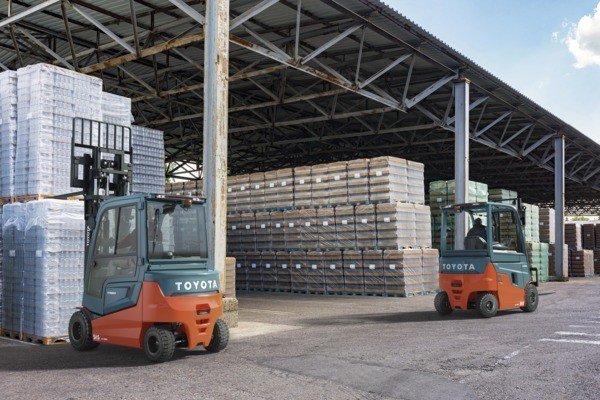
Pallet trucks and stackers
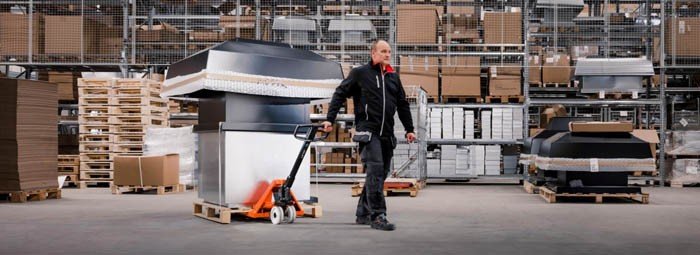
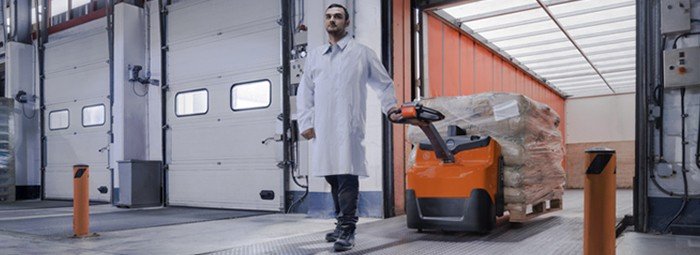
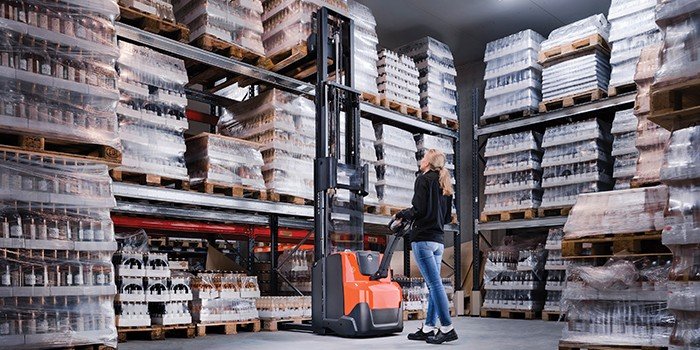
01. Hand pallet truck (Example sizes: 2.0 / 2.3 / 2.5 t). A manually moved truck with a hydraulic pump and low-lift forks. It raises a pallet just clear of the floor. Typical use: Short pallet moves in shops, stores and loading areas. Key point: A pallet truck transports loads near floor level; it cannot place pallets into high racking. 02. Powered pallet truck (Example sizes: 1.3 / 1.5 / 2.0 / 2.5 t). Electric travel and low-lift forks reduce manual effort. Versions include pedestrian, fold-down platform and seated or stand-in trucks. Typical use: Repeated horizontal transport and vehicle loading. Key point: A ride-on platform changes the operating method. Know the exact controls and pedestrian clearances. 03. Powered pallet stacker (Example sizes: 0.8 / 1.2 / 1.6 / 2.0 t). A mast raises pallets for stacking. The operator may walk behind the tiller, stand on a platform or work in a cab. Typical use: Stacking pallets in smaller warehouses and production areas. Key point: Support legs and pallet design must be compatible. This is different from a low-lift pallet truck.
Counterbalance forklifts: 1 to 8 tonnes
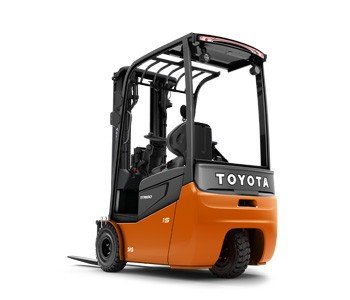
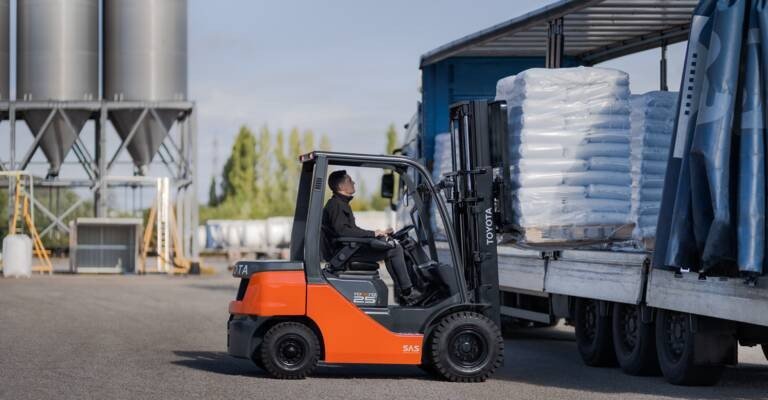
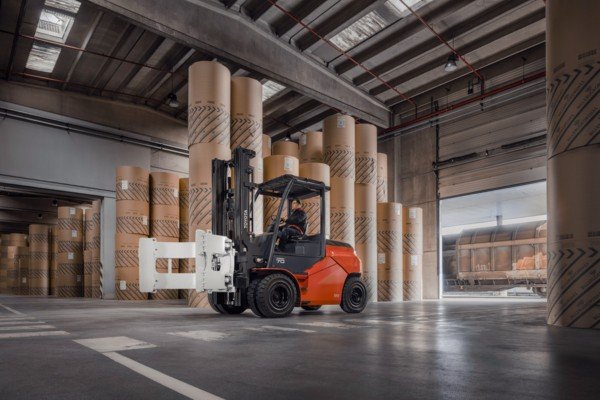
04. Three-wheel electric counterbalance (Example sizes: 1.0 / 1.25 / 1.5 / 2.0 t). A compact battery-powered forklift with a counterweight at the rear. The rear steering assembly allows tight manoeuvres. Typical use: Indoor pallet handling and confined working areas. Key point: Recognise the rear-end swing. Three-wheel construction does not remove the need for stability precautions. 05. Four-wheel electric counterbalance (Example sizes: 2.0 / 2.5 / 3.0 / 3.5 / 5.0 t). A battery-powered counterbalance truck with four-wheel running gear. Configurations suit varied loads and work environments. Typical use: Warehouses, factories, loading yards and goods handling. Key point: The same body style can have several capacities. Read the plate instead of judging by appearance. 06. Engine-powered counterbalance (Example sizes: 1.5 / 2.5 / 3.5 / 5.0 / 8.0 t). Diesel and LPG versions use an internal-combustion engine. LPG trucks often have a gas cylinder; diesel trucks have a fuel tank. Typical use: Yards, loading bays and industrial goods handling. Key point: LPG also produces exhaust. Indoor suitability depends on ventilation, emissions controls and the workplace assessment. 07. Heavy electric counterbalance (Example range: 6-8 t; larger specialist models also exist). A larger electric forklift designed for heavier goods. Battery power is not limited to small warehouse trucks. Typical use: Paper, manufacturing, heavy pallets and industrial materials. Key point: Attachments can be central to the job. The photo shows a handling attachment rather than ordinary pallet forks.
3.5 tonne and 5 tonne forklifts explained
3.5 t (3,500 kg) forklift: a larger general-purpose counterbalance truck, usually diesel, LPG or electric four-wheel. It is used in builders' merchants, factories, timber yards and busy loading docks where pallets are heavier than standard retail goods — for example bagged cement, tiles, steel coils or full drinks pallets. It is longer and heavier than a 2.5 t truck, so turning circles, braking distances and floor loading all increase. Typical rated load centre is 500 mm. 5 t (5,000 kg) forklift: the start of the heavier industrial class. It handles machinery, large stone or concrete products, heavy steel and double pallets. The counterweight and service weight are much larger (often 7-8 t for the truck alone), so the ground, ramps and dock plates must be rated for truck plus load. Many 5 t trucks run on pneumatic tyres for yard work. What changes between 1.5 t, 2.5 t, 3.5 t and 5 t: the counterweight, wheelbase, tyre size, mast strength and visibility around the load. The stability principle is the same — the load and the truck balance over the front axle (the stability triangle). The rated figure is valid only at the stated load centre and lift height; at a longer load centre, higher lift, side-shift or with an attachment, the permitted load is lower. Always check the capacity plate. Which licence category: in this course trucks up to 5 t are covered by category W1 and trucks above 5 t by category W2. You choose the capacity of the truck you will operate during enrolment, and it is printed on your card. Your employer must still authorise you for the specific truck at your workplace.
Heavy industrial forklifts: 8 to 85 tonnes
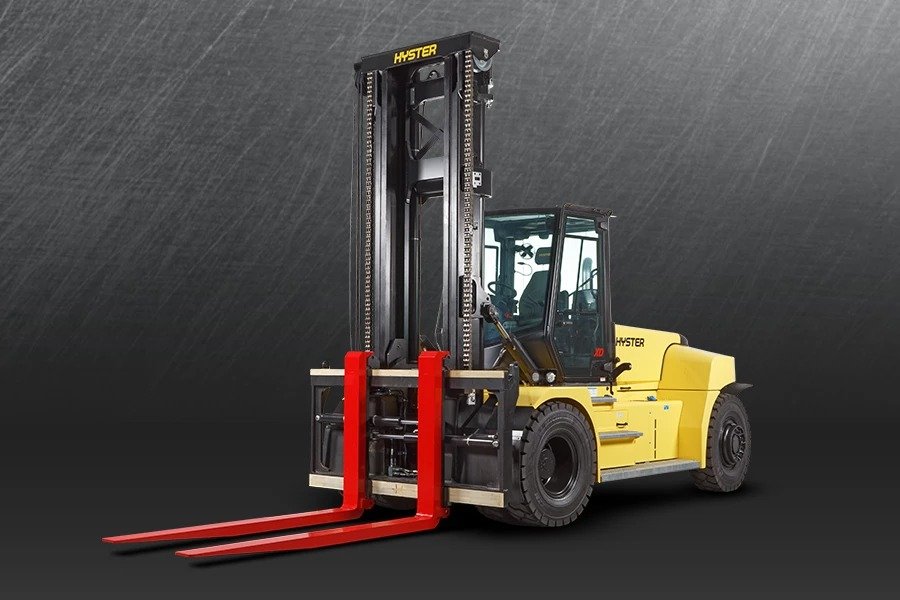
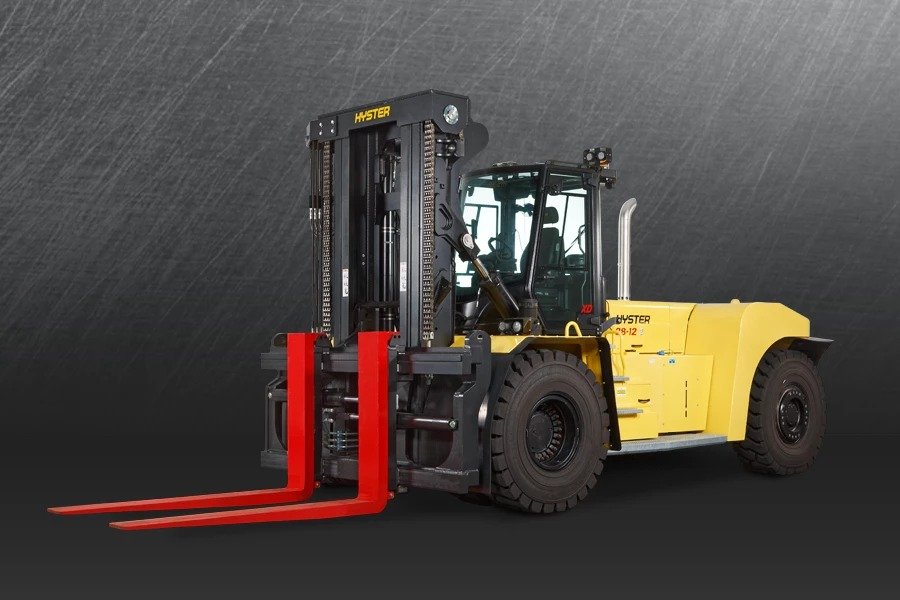
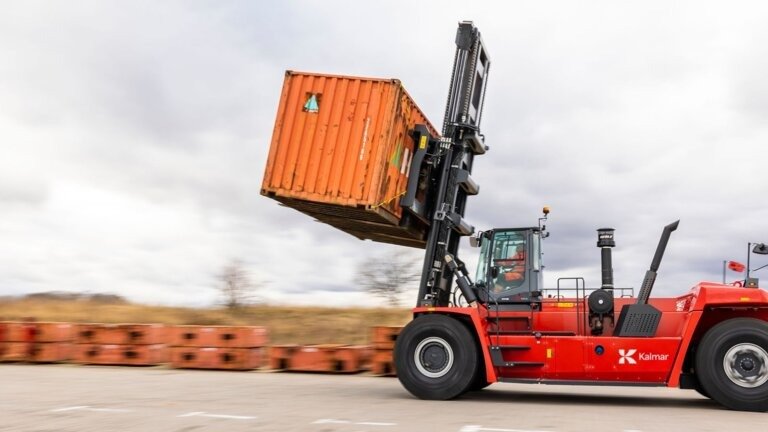
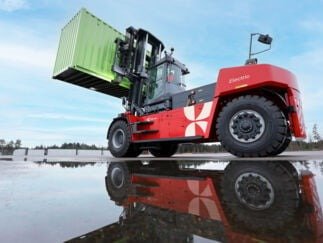
08. Large industrial counterbalance (Example manufacturer range: 8-18 t). A heavy-duty forklift with a substantial chassis, mast and counterweight for larger industrial loads. Typical use: Timber packs, machinery, steel products and precast goods. Key point: The load plus the truck creates high ground and axle loads. Site suitability matters as well as lift capacity. 09. Heavy industrial counterbalance (Example Hyster H25-32XD range: 25-32 t). A large conventional mast forklift for demanding industrial and terminal work. It remains a fork truck despite its size. Typical use: Heavy manufacturing, steel handling and port cargo. Key point: Load dimensions, centre of gravity and attachment configuration need to be planned for each handling task. 10. Very heavy industrial counterbalance (Example manufacturer range: 38-54 t). Very large mast forklifts are built for exceptional industrial loads. This range illustrates how far capacities extend beyond 2.5 tonnes. Typical use: Steel slabs, large components, concrete products and terminal cargo. Key point: These figures describe a model range. They never mean every load can be lifted at every height or load centre. 11. Super-heavy industrial forklift (Example Kalmar range: 60-85 t). Specialist mast forklifts can reach nominal capacities of 60 to 85 tonnes in the cited manufacturer range. Typical use: Exceptional industrial loads and heavy logistics. Key point: These machines need dedicated lift planning, load data and suitable ground. They are not simply larger warehouse trucks. 12. Heavy electric industrial forklift (Example Kalmar range: 18-33 t). Battery-electric counterbalance forklifts also exist in the heavy industrial class. Typical use: Heavy cargo and manufacturing operations with suitable charging infrastructure. Key point: Power source and capacity are separate characteristics. Electric does not mean small or lightweight.
Warehouse racking and order picking trucks
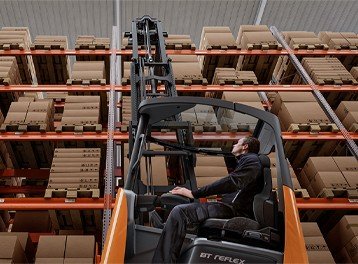
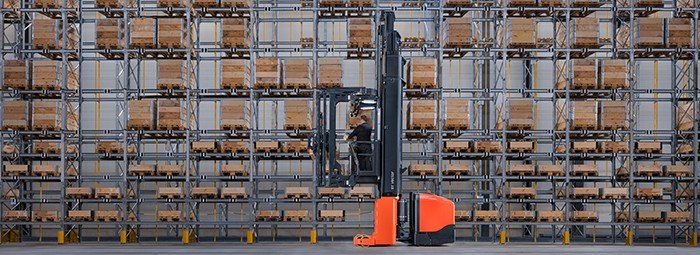
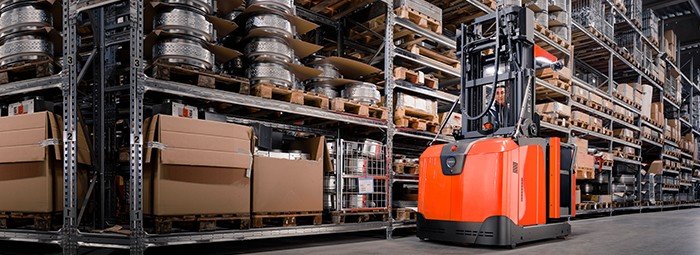
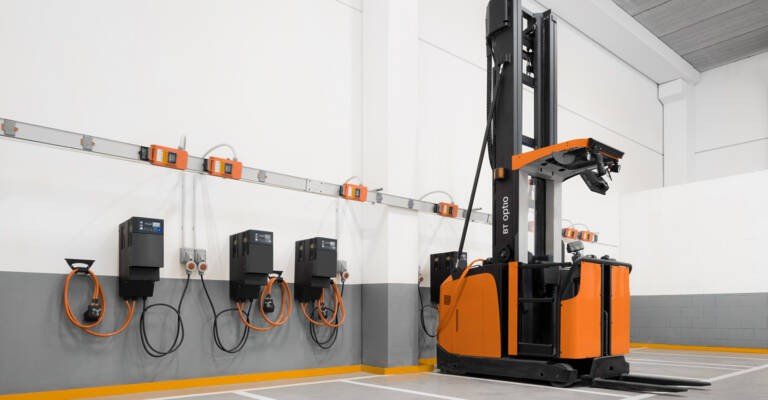
13. Reach truck (Example range: 1.2-2.5 t). The mast or fork assembly reaches forward to collect or place a pallet, then retracts towards the truck. Typical use: High warehouse racking and narrower working aisles. Key point: A warehouse reach truck is not a container reachstacker. They differ greatly in size, mechanism and application. 14. Very narrow aisle / turret truck (Example range: 1.0-1.5 t). A specialised racking truck works in very narrow aisles, often using a traversing or rotating fork head and rail or wire guidance. Typical use: High-density storage and pallet replenishment. Key point: Man-up and man-down versions differ. Guidance, aisle conditions and operator recovery arrangements are site-specific. 15. Low-level order picker (Example sizes: 1.0 / 1.2 / 2.0 / 2.5 t). An operator travels with pallets or roll cages and collects individual items from low storage positions. Some versions raise the platform. Typical use: Retail distribution and high-volume picking routes. Key point: Picking individual items is a different task from moving full pallets into racking. 16. Medium / high-level order picker (Capacity depends on platform and load configuration). The operator compartment elevates so the picker can access goods at higher storage levels. Typical use: Piece picking from multi-level warehouse shelving. Key point: Know the platform limits and the machine-specific fall protection and emergency-lowering arrangements.
Special forklifts
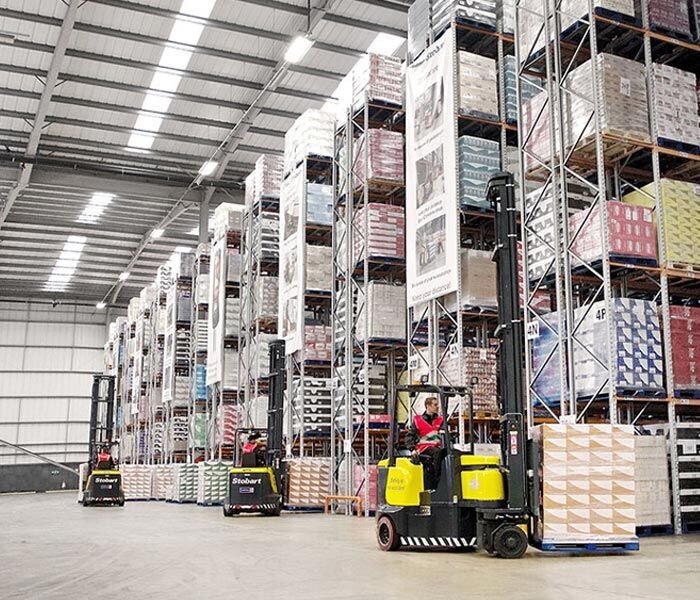
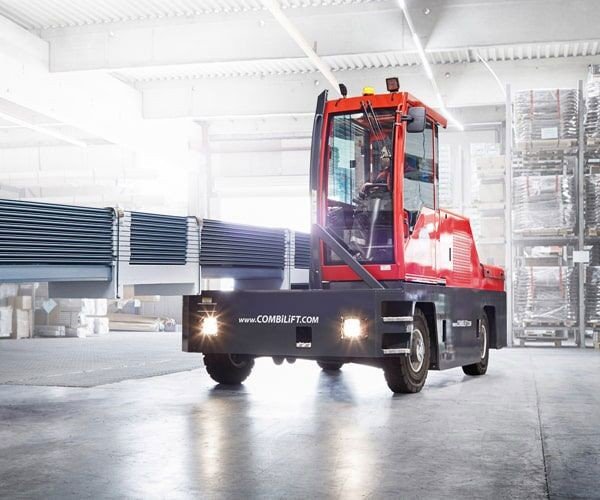
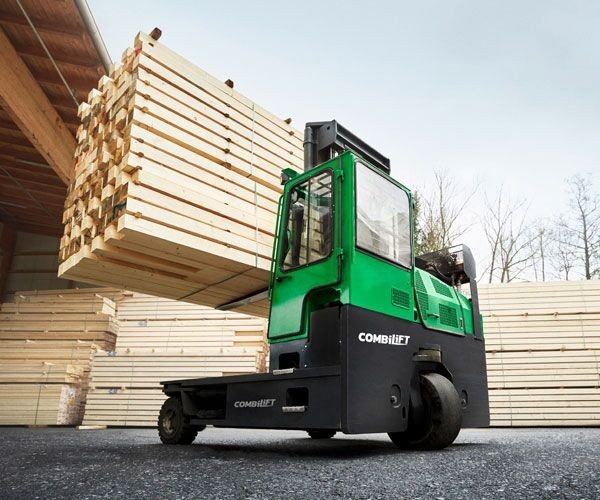
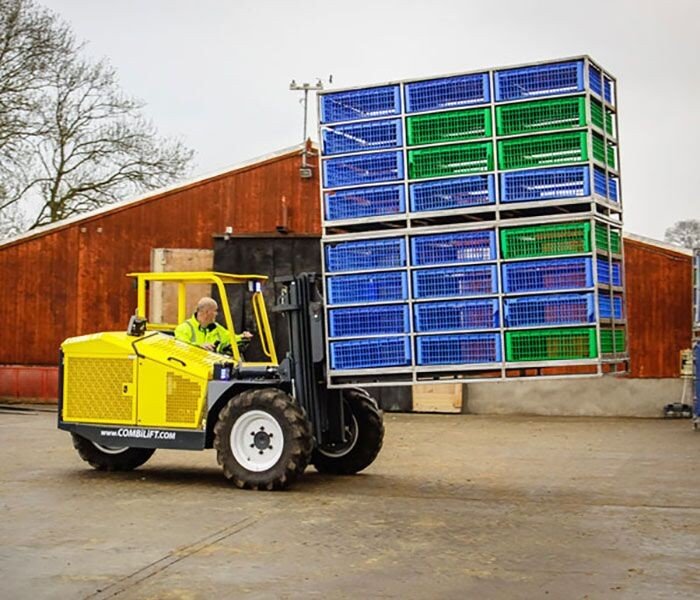
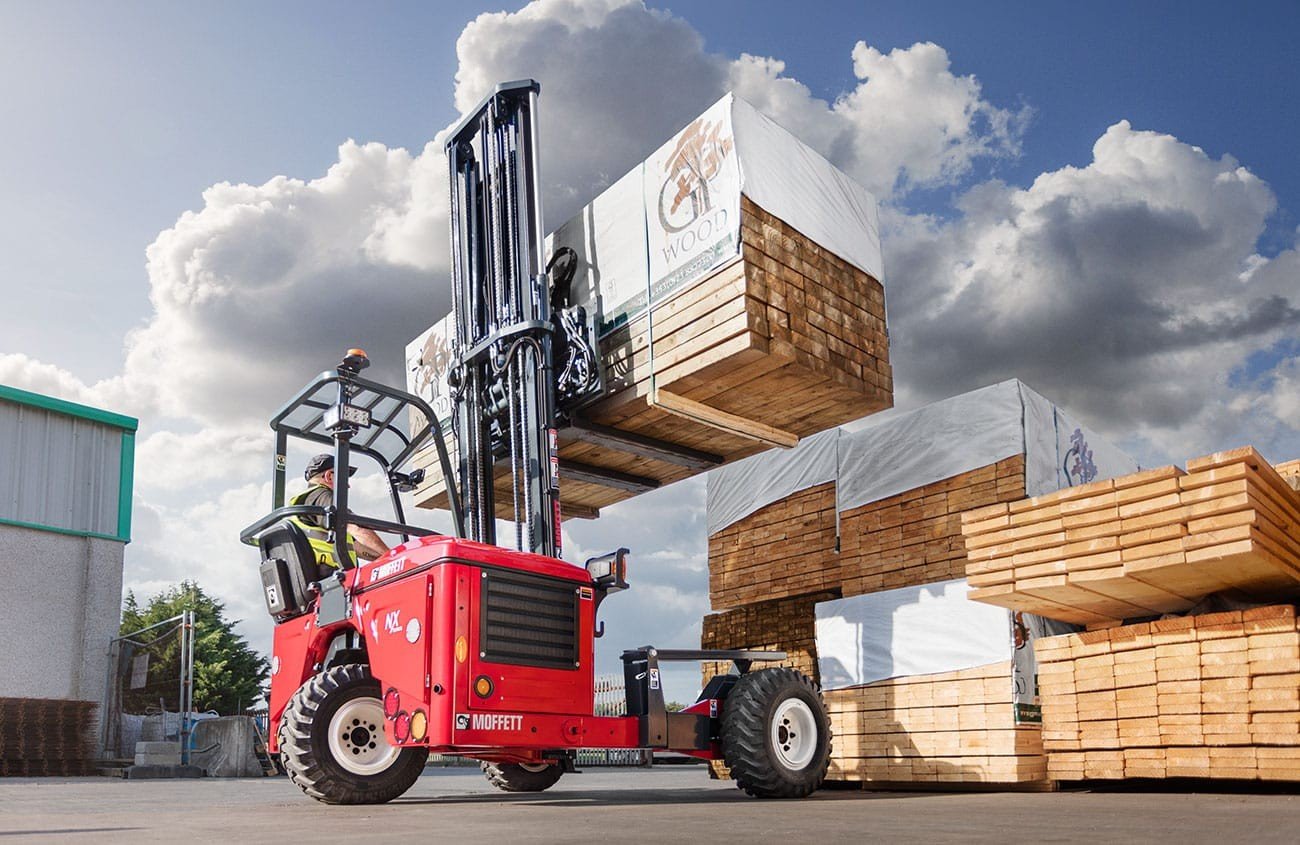
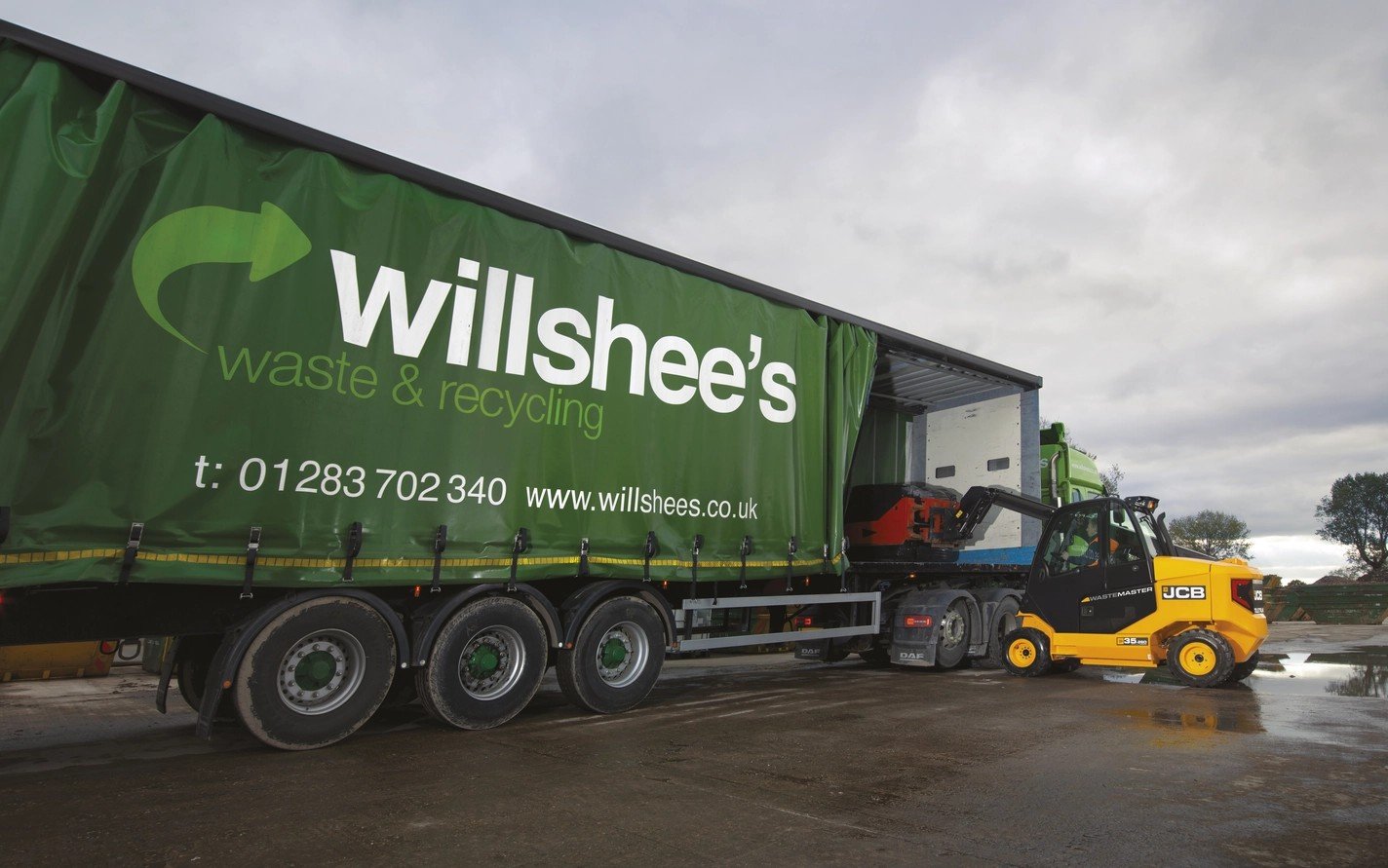
17. Articulated forklift (Capacity varies by model and mast configuration). The front section pivots relative to the main body, helping the forks turn into racking in narrow aisles. Typical use: Warehouses combining loading work and narrow-aisle storage. Key point: The articulation changes steering and swept paths. Familiarity with a standard counterbalance truck is not enough. 18. Sideloader (Capacity varies; industrial models handle long, heavy loads). Forks collect a load from the side. Long goods can be carried along the truck on its supporting deck. Typical use: Timber, pipe, steel sections and other long products. Key point: Load support and overhang differ from a front-loading forklift. Check the travel envelope of the entire load. 19. Multidirectional forklift (Capacity varies; compact and heavy industrial versions exist). The steering system allows travel in different directions, including sideways on appropriate models. Typical use: Long loads in restricted aisles and mixed pallet handling. Key point: Check the selected steering mode before movement. The truck may not follow the path a bystander expects. 20. Rough-terrain mast forklift (Capacity is model-specific). A mast forklift with running gear and tyres designed for more demanding surfaces than a conventional warehouse truck. Typical use: Agriculture, building-material yards and outdoor handling. Key point: Rough-terrain capability does not make every slope or soft surface safe. Follow the rated operating limits. 21. Truck-mounted forklift (Capacity is model-specific; compact delivery machines). A forklift carried on a delivery vehicle, then dismounted for local unloading where no forklift is available. Typical use: Building-material deliveries and customer-site unloading. Key point: Mounting, transport securing and dismounting are additional operations with their own procedures. 22. Telescopic industrial forklift (Example family: around 3.0-3.5 t nominal capacity). An industrial forklift uses a telescopic boom instead of a conventional vertical mast to reach forward. Typical use: Loading vehicles from one side and reaching into working areas. Key point: Forward reach affects available capacity. Use the exact load chart for the installed attachment and boom position.
Telescopic, container and related equipment
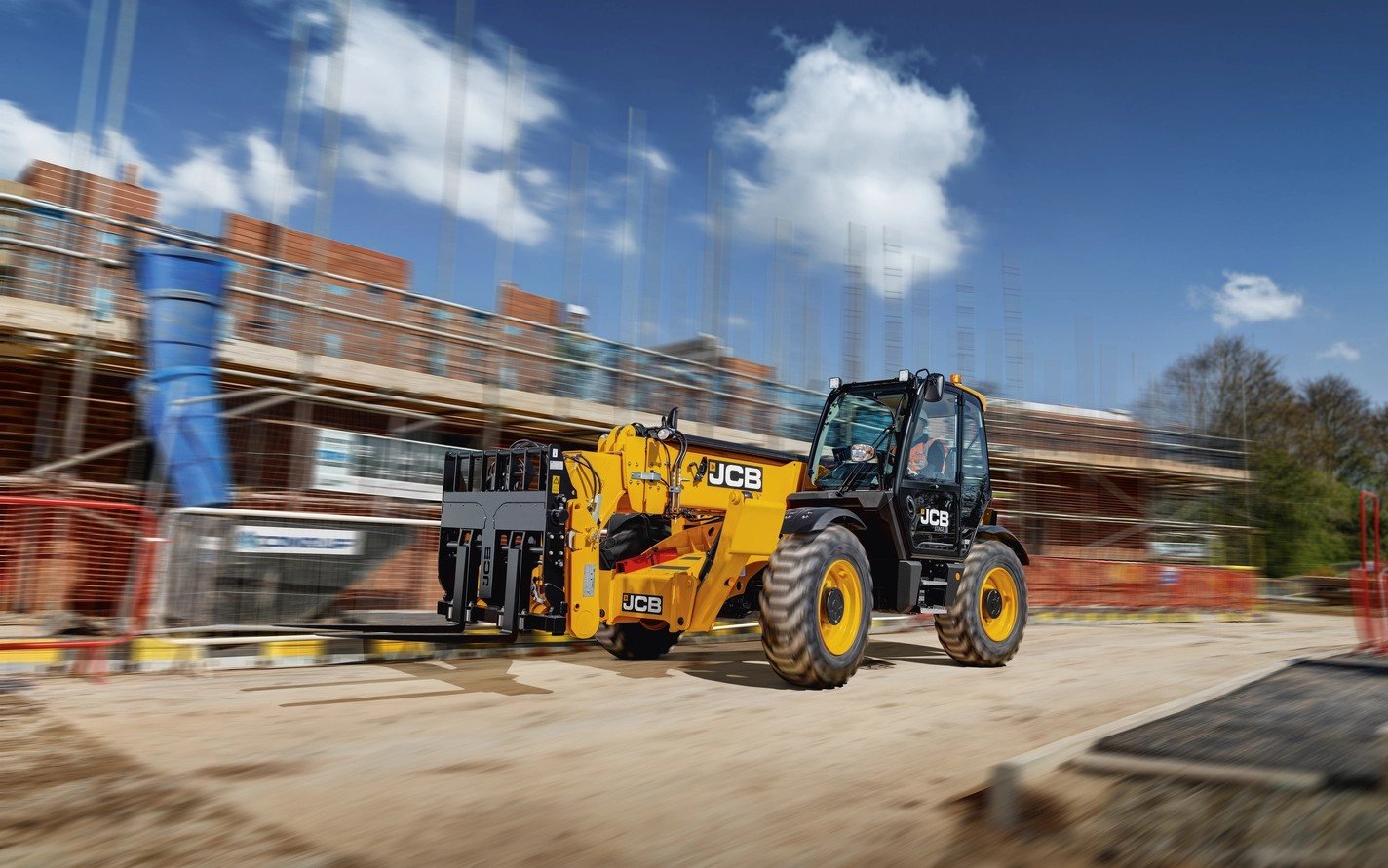
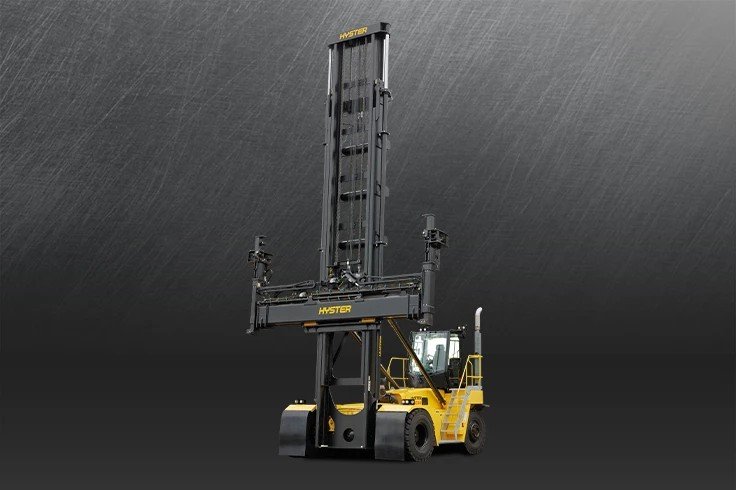
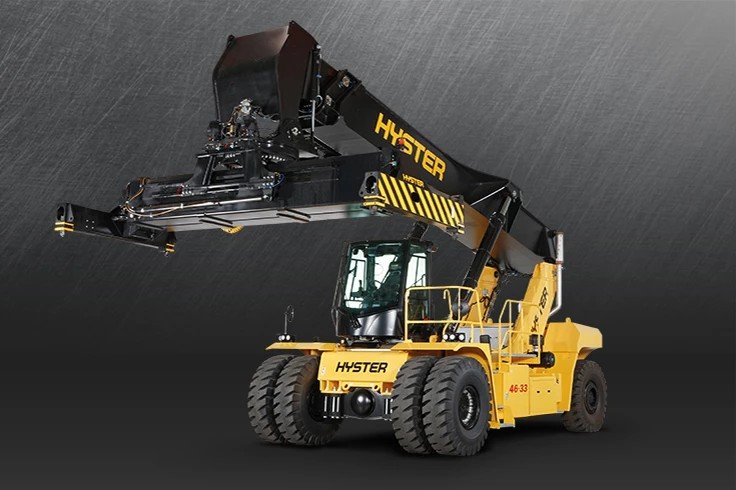
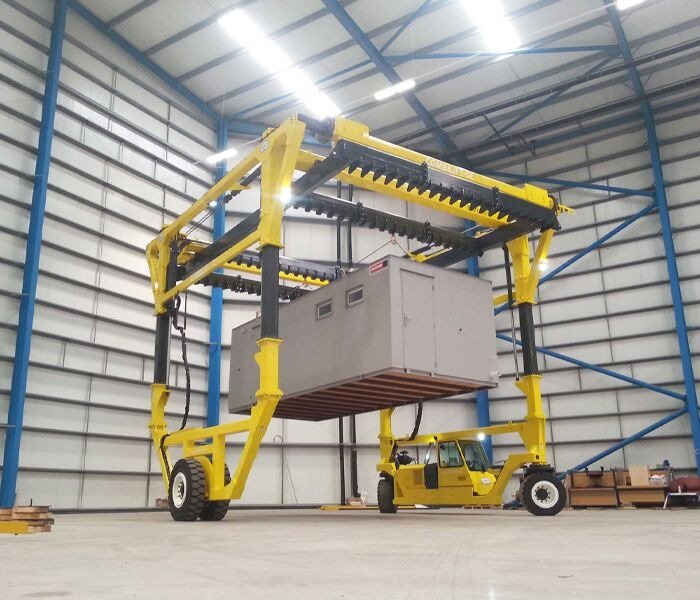
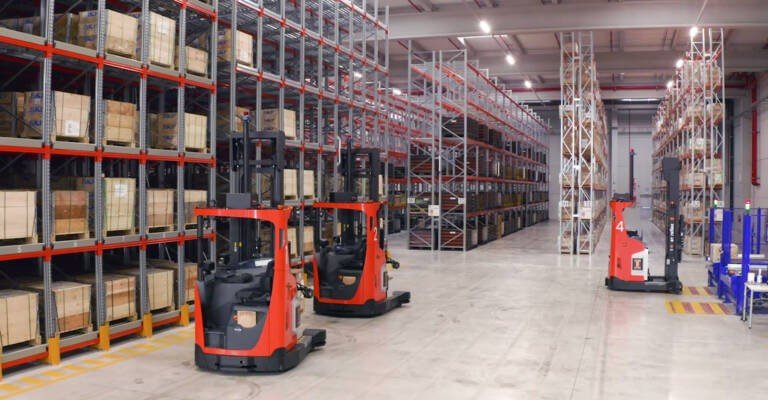
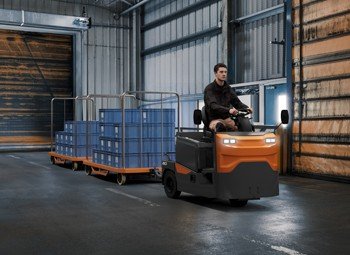
23. Telehandler / telescopic handler (Capacity and reach vary widely by model). A telescopic boom lifts and extends a fork carriage or other approved attachment. Fixed-boom and rotating-upperstructure designs exist. Typical use: Construction, agriculture and material placement. Key point: A telehandler is related equipment with different controls and load charts. A forklift photo guide does not establish competence on it. 24. Mast-type container handler (Separate ratings for empty and laden-container models). A large mast truck uses a container attachment or spreader rather than standard pallet forks. Typical use: Stacking and transferring freight containers in terminals. Key point: An empty-container handler must not be treated as a loaded-container handler. Check attachment and rated duty. 25. Container reachstacker (Example Hyster RS46 family: nominal 46 t class). A large telescopic-boom machine lifts containers through a spreader and can reach beyond the first row. Typical use: Ports, rail terminals and intermodal yards. Key point: Capacity depends on reach, stacking position and configuration. This is not a warehouse reach truck. 26. Straddle carrier - related equipment (Capacity is model- and application-specific). A wide frame straddles a load and lifts it within or beneath the structure. It is not a conventional mast forklift. Typical use: Large industrial loads, containers and oversized components. Key point: Its footprint, lifting arrangement and travel path require a dedicated operating method. 27. Automated forklift / AGV (Capacity follows the particular truck and configuration). An automated pallet truck, stacker or reach truck follows a controlled navigation system and material-handling workflow. Typical use: Repeated transport and storage movements in organised facilities. Key point: Do not bypass detection systems or enter restricted zones. Recovery and manual modes need designated procedures. 28. Tow tractor - related equipment (Tow rating is different from forklift lift capacity). A powered tractor pulls trailers or a train of load carriers. It does not normally lift pallets on a mast. Typical use: Production supply routes, airports and internal logistics. Key point: A towing figure is not permission to lift the same weight. Check the tractor, coupling and trailer ratings.
Attachments change the handling task
Fork positioner: moves the forks laterally to suit different load widths. A side-shift moves the fork assembly sideways as a unit — different functions, although one attachment may combine them. Clamps and rotators: paper-roll clamps, bale clamps and rotators grip or turn specialised loads. Grip force, load suitability and actual capacity are configuration-specific. Fork extensions and long-load attachments change the effective geometry of the load. Use only a compatible, approved arrangement with the relevant rated capacity. Container spreaders connect to container lifting points. Empty-container handlers, laden-container handlers and reachstackers have different duties and ratings. Capacity plate and attachment data: confirm the truck identity, attachment, load centre and lift-height or reach conditions. Attachments can reduce actual capacity. Other variants — cold-store cabins, special tyres, explosion-protected configurations, double-pallet handling and alternative power systems — modify a base truck. They are not automatically separate capacity classes.
Which forklifts does our course cover?
The ForkliftReady course and card cover counterbalance forklifts — class I (electric) or class II (diesel, LPG, petrol), type W1 up to 5 t or W2 above 5 t. Reach trucks, order pickers, telehandlers, container handlers and other specialist machines each need their own training on that exact truck type, and your employer must authorise you in writing for every type you drive.
Photo guide: all 28 trucks
Photos show example models; listed capacities are not load charts.
Front / Přední strana
obsluhy motorových vozíků
Zkušební komisař
Back / Zadní strana
Questions
- What does 2.5 t mean on a forklift?
- It means 2,500 kg nominal lifting capacity at the standard load centre and lift height, without attachments. At greater height, a longer load or with an attachment the permitted load is lower.
- Is a reach truck the same as a reachstacker?
- No. A warehouse reach truck (1.2-2.5 t) reaches into racking; a container reachstacker (around 46 t class) lifts containers with a telescopic boom in ports and terminals.
- Does one forklift licence cover every type?
- No. Training and authorisation apply to the truck type you were assessed on. Each type has its own operating method.
All guides →
- Forklift types and capacities: a guide to 28 trucks
- Get your forklift certificate online
- How much does a forklift licence cost?
- Forklift certification for experienced operators
- Forklift training in English
Forklift licence by country
- Forklift licence Austria
- Forklift licence Belgium
- Forklift licence Bulgaria
- Forklift licence Croatia
- Forklift licence Cyprus
- Forklift licence Czech Republic
- Forklift licence Denmark
- Forklift licence Estonia
- Forklift licence Finland
- Forklift licence France
- Forklift licence Germany
- Forklift licence Greece
- Forklift licence Hungary
- Forklift licence Ireland
- Forklift licence Italy
- Forklift licence Latvia
- Forklift licence Lithuania
- Forklift licence Luxembourg
- Forklift licence Malta
- Forklift licence Netherlands
- Forklift licence Poland
- Forklift licence Portugal
- Forklift licence Romania
- Forklift licence Slovakia
- Forklift licence Slovenia
- Forklift licence Spain
- Forklift licence Sweden
- Forklift licence United Kingdom